
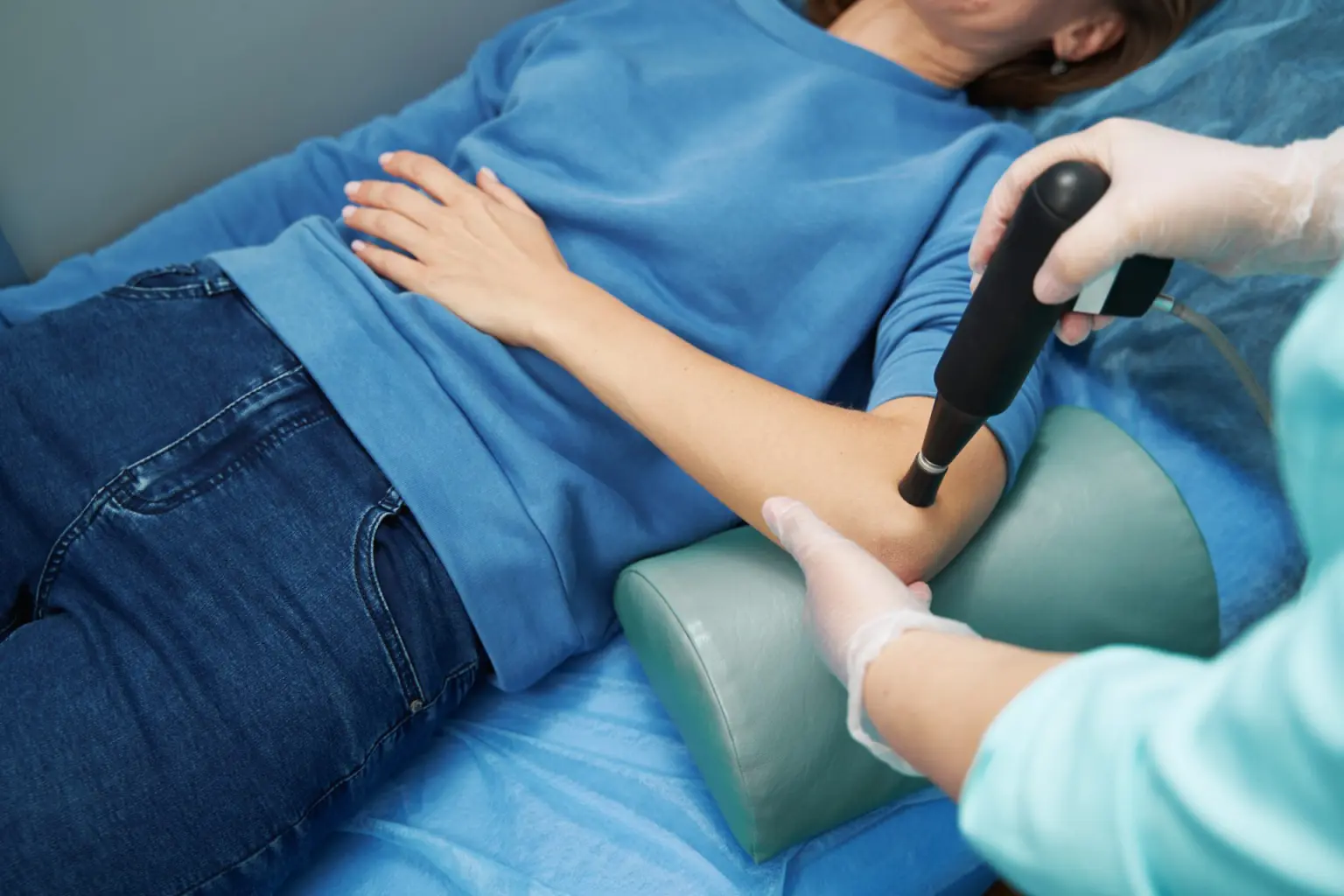
Shockwave Treatment For Golfers Elbow
How Shockwave Helps Golfers Elbow
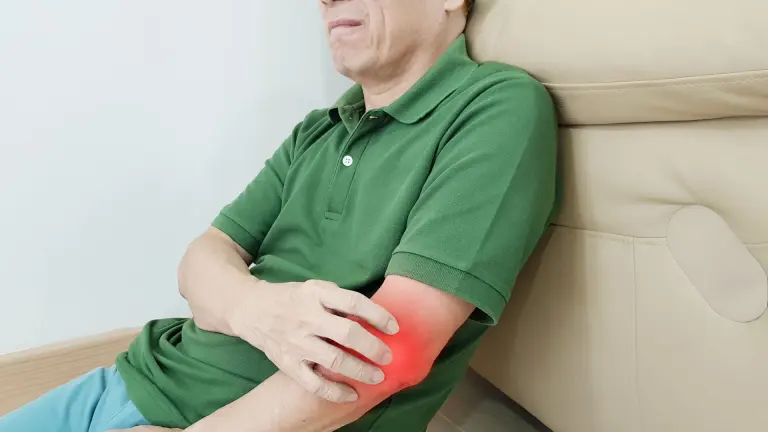
Golfer’s elbow (medial epicondylitis) happens when the wrist-flexor tendons—where they attach to the inside of the elbow—become irritated and start to break down. It’s not just golfers who deal with it; pickleball players often experience the same strain from repeated swings, quick wrist movements, and paddle impacts.
Shockwave therapy (ESWT) delivers controlled pulses of sound energy to the irritated tendon. This stimulus jump-starts stalled healing, increases local blood flow, and helps the tendon rebuild stronger, better-organized collagen—while also calming overactive pain signals. Whether it’s from golf, pickleball, or daily activities, ESWT supports faster, more complete recovery.
Why Shockwave Therapy Helps Golfers/Tennis Elbow
Shockwave targets the root drivers of golfer’s elbow—stalled tendon healing, poor blood flow, and oversensitive pain nerves. Here’s why it helps so many stubborn cases:
- Re-activates tendon repair and reduces lingering inflammation
- Promotes healthier collagen remodeling so the tendon tolerates gripping and lifting better
- Desensitizes painful trigger points around the flexor-pronator mass
- Non-surgical and needle-free; done through the skin in brief visits
Who’s a Good Candidate?
Shockwave therapy (ESWT) is a great option for people with mechanical or myofascial low-back pain that’s lasted more than six weeks and hasn’t improved with the basics—activity or load adjustments, mobility and strength work, and hands-on care.
It’s especially helpful when pain is well-localized (such as the paraspinal muscles, gluteal or hip attachments, or around the SI region) and keeps flaring with bending, lifting, or rotational movements. This is often seen in people who play pickleball, golf, or other sports that involve twisting or sudden directional changes.
Shockwave helps by desensitizing painful trigger points and stimulating soft-tissue repair, making it an excellent complement to a conservative care plan that includes core and hip strengthening, flexibility training, posture work, and a gradual return to activity.
How many sessions of shockwave therapy for Golfers Elbow?
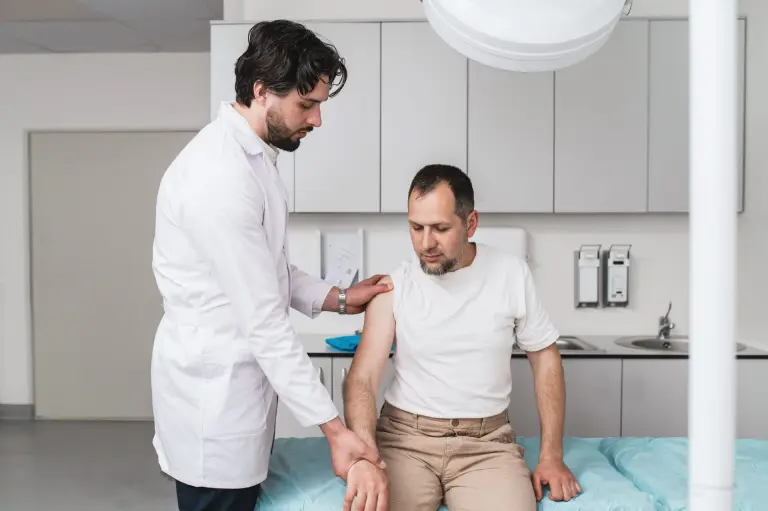
Most golfer’s elbow (medial epicondylitis) plans use short weekly sessions for a few weeks. In research and best-practice guidance, a common protocol is about 6-12 sessions, with parameters adjusted to tolerance and progress. Some patients may benefit from up to 5–6 sessions if symptoms are long-standing. We pair shockwave therapy with activity tweaks so gains build each week.

Complementary Care That Boosts Shockwave Therapy Results


What Our Patients Are Saying
Meet the Team





Frequently Asked Questions
Yes—shockwave (ESWT) is commonly used when golfer’s elbow lingers despite rest, bracing, and exercises. Reviews of upper-limb tendinopathies (including elbow) show ESWT can reduce pain and improve function, and clinical overviews recommend it after a trial of conservative care. Evidence is strongest for chronic cases (weeks to months).
Some patients notice easing within 2–3 sessions, with steadier gains over 4–8 weeks as tendon healing builds. Pain relief and grip function typically improve more in chronic cases than in very recent injuries.
Plan on light activity for 24–48 hours and avoid anti-inflammatory meds (like NSAIDs), which can blunt the tissue-healing response ESWT is trying to trigger. Pair treatment with guided rehab (grip/forearm loading and mobility) and increase swings or gym work gradually as symptoms settle.