

Shockwave Therapy Plantar Fasciitis
Shockwave Therapy for Plantar Fasciitis in Tucson
Shockwave therapy delivers small bursts of sound to the exact sore spot in your heel. Those bursts “unstick” a slow-to-heal plantar fascia and nudge your body back into repair mode—without shots or surgery—so it’s a good option when rest, inserts, or stretching haven’t done the trick.
Inside the tissue, the stimulus draws more blood to the area and rallies your body’s repair crew. Over the next few weeks the fascia lays down new, better-organized collagen (the stuff that gives it strength), so the heel becomes less irritated and more resilient. Relief usually builds gradually across a series of visits rather than in a single session.
What Is Plantar Fasciitis?
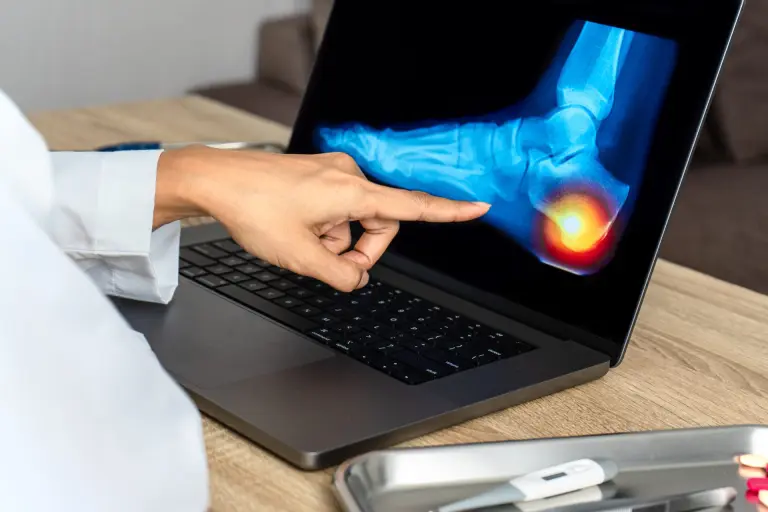
Plantar fasciitis is a very common cause of sharp, stabbing heel pain when you take your first steps in the morning or after sitting. The thick band of tissue on the bottom of your foot (the plantar fascia) becomes irritated and tight, so it hurts when you start to move. Pain is usually felt at the front of the heel, often eases as you walk, then returns after long periods of standing, walking, or exercise. It is often linked to tight calf muscles, unsupportive shoes, a sudden jump in activity, or spending long hours on hard floors.
Who’s a Good Candidate?
You’re a strong fit for shockwave if your plantar fasciitis has lingered for months and hasn’t improved with the basics—custom or over-the-counter inserts, calf/plantar fascia stretching, footwear changes, rest, or activity tweaks. It’s especially helpful when you still have sharp “first-step” heel pain and point tenderness at the front/inside of the heel, or when imaging shows a thickened plantar fascia. We’ll evaluate your history, exam findings, and goals to confirm you’re a match and then tailor the treatment plan to you.

How many sessions of shockwave therapy for plantar fasciitis?
Everyone heals at a different pace, but most plantar fasciitis plans run 12–24 treatments over 6–12 weeks, with brief sessions scheduled 1–2 times per week. We adjust the settings each visit to your comfort and progress and pair care with simple calf/plantar-fascia stretches and footwear guidance so results build week to week.

Complementary Care That Boosts Shockwave Therapy Results


What Our Patients Are Saying
Stubborn Plantar Fasciitis? Tucson Shockwave Relief
At Life Aligned Wellness Center in Tucson, we use shockwave therapy (ESWT) to treat stubborn plantar fasciitis—the sharp morning heel pain that lingers despite rest, stretches or inserts. ESWT delivers acoustic sound waves to the sore fascia to stimulate healing and reduce pain, and is commonly recommended for chronic cases that haven’t improved with conservative care.
Ready to see if you’re a candidate? Schedule a consultation at (520) 731-9595 or PatientCare@lifealignedwellness.com and we’ll tailor a plan to your goals.
SCHEDULE A CONSULATION NOWMeet the Team





Frequently Asked Questions
Evidence from randomized trials and recent meta-analyses shows shockwave therapy can reduce heel pain and improve function, especially in chronic cases that did not respond to stretching, inserts or rest. Results can vary, and major clinics note it is promising but not always consistently effective.
Expect a strong tapping/pressure sensation over the sore spot. You might feel temporary soreness for a day or two afterward. Most people return to normal activities right away, but it is smart to avoid high-impact exercise for 48 hours and avoid NSAIDs (like ibuprofen) right before and just after sessions because they can blunt the healing response. Paracetamol/acetaminophen is usually fine if you need it.
Yes, Shockwave Therapy is a safe and non-invasive treatment. It has been widely used for many years and is considered a low-risk therapy with minimal side effects. At Life Aligned Wellness Center, we ensure that only trained professionals perform the therapy to maximize safety and effectiveness.
It is generally avoided in pregnancy, over active infections or tumors, over open growth plates in children, and used with caution in people with bleeding disorders or on certain anticoagulants. Your clinician will screen for these before treatment.